
Meditation on Rublev's Trinity
Yesterday we celebrated the great Solemnity of the Most Holy Trinity. As a belated but still-applicable tribute, enjoy a reflection one of our Sisters recently wrote about her experience contemplating this great mystery with the help of a famous icon …
Room At the Table - a Visio Divina
Some time ago, I found myself drawn to pray with Andrei Rublev’s icon of the Holy Trinity. There was something about that sacred image – simple yet profound – which kept drawing me deeper into the fathomless mystery that is our Triune God. But after a while, the icon began to challenge me in an unexpected way ...
The Father, at left, is raising His hand in blessing upon the sacrifice of His Son, who is seated in the center. The First and Second Persons of the Trinity gaze at each other with serene and total love. But what about the Holy Spirit, who is on the right of the painting? He seems to be left out! This bothered me, and pretty soon, all I could see when I looked at the image was this apparent exclusion. The grace and consolation I had initially experienced in my prayer gave way to confusion and agitation.
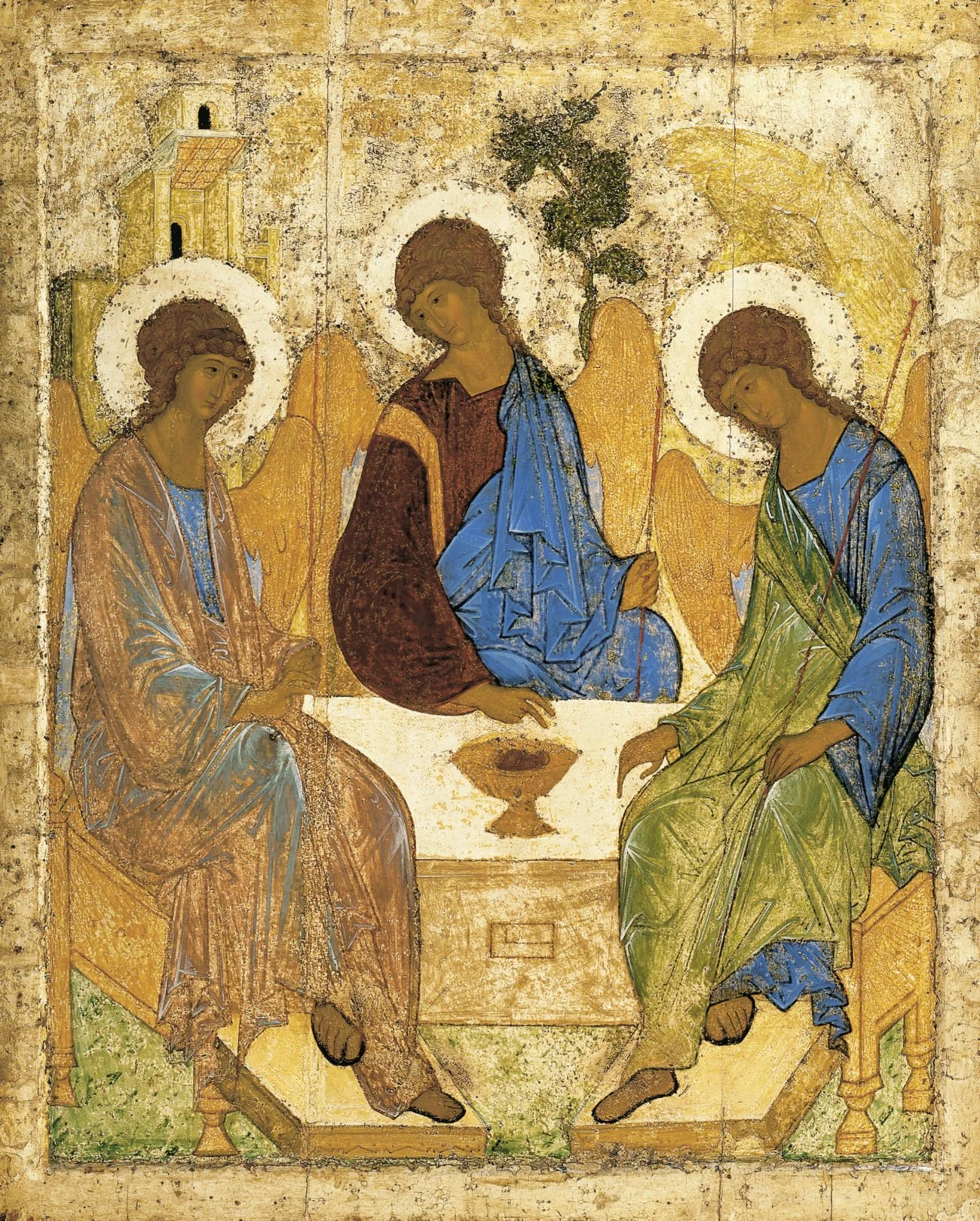
The Lord granted me the discernment to recognize that this lack of peace was less about anything wrong with the icon, and more about something in my own heart that needed to be explored and healed. So I persevered in prayer, hoping for an insight and grace.
I soon realized that my skewed interpretation of the image was based on a deeply-rooted lie of the enemy: that God is selfish and His love self-seeking. I know, it sounds positively absurd and even blasphemous when stated “out loud” like that, but in the murky world of the semi-conscious, where the devil prefers to work, such lies can be devastatingly easy to believe. This particular caricature of our loving Father is literally the oldest trick in the book – think of the serpent’s words in the Garden, where he insinuated that the Lord God was selfishly holding something back from His children! In the case of the Trinity icon, the enemy was whispering something similarly toxic to my heart: If They can leave out the Holy Spirit, how do you expect Them to include YOU?
I struggled against this rather bald-faced temptation, but the Holy Spirit is notoriously difficult to “pin down,” and all my “head knowledge” of Trinitarian theology proved only marginally helpful. I knew intellectually that there is no division among the Three Persons, and yet my tiny human heart couldn’t wrap itself around the concept of a love that is complete and total, yet not exclusive. Eventually, I realized that I needed to consider the Spirit-Figure in the icon more closely. With the help of grace, my perspective began to shift – not just intellectually, but on a deeper heart-level.
The Spirit’s posture and expression as He gazes upon the Father and Son are relaxed and peaceful, not anxious or grasping. His head is bowed and His body gently inclined towards the other Persons. He clearly doesn’t feel that He is being left out of anything. Rather, He seems to be perfectly content to be Who He is: Personified Love, the unifying bond of the other two Persons. He doesn’t take center stage; He directs our gaze to the Father and Son. I then gradually noticed other indications that each Person in the icon has a unique and loving relationship with the Others. The Father’s gaze takes in the Son, yes, but also the Spirit. And though the Son’s head is turned towards the Father, His body faces the Spirit with open arms. There is no competition, no exclusion – just a marvelous, tranquil harmony that could only arise from each Person surrendering Himself totally to the Others.
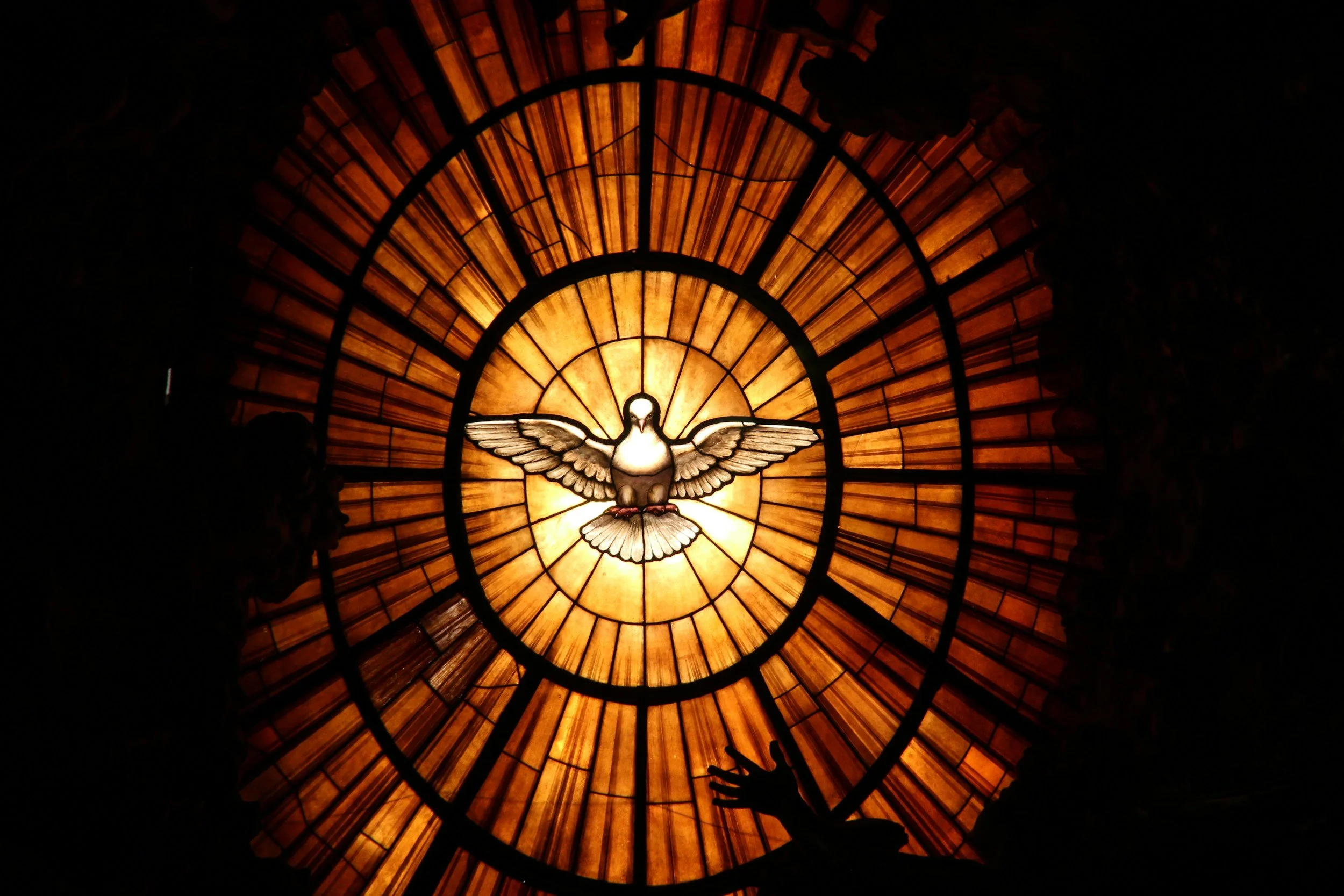
I was reminded of a powerful point that I once encountered in spiritual reading: that the kenosis, the self-emptying, of the Spirit consists precisely in His willingness to be hidden, to not appear “as a Person” for much of salvation history. This is no more “forced” upon Him than the Passion was “forced” upon the Son! No, it is an expression of joyful, obedient, self-giving love – that love which is the inner essence of our Trinitarian God. Man may be consumed with self-assertion and vying for attention and affection, but the Lord Who is the Spirit has no such anxiety.
May that same Holy Spirit descend into our hearts anew, that each of us may learn to trust more fully in the Love of the Trinity, to Whom we can surrender ourselves totally and without fear. And with that grace, we can come to see and fully appreciate one last important element in Rublev’s beautiful icon: the empty space that opens out towards us. Why? Because the Three Persons always leave room at the table … room for you and for me.