
For Freedom Christ Set Us Free
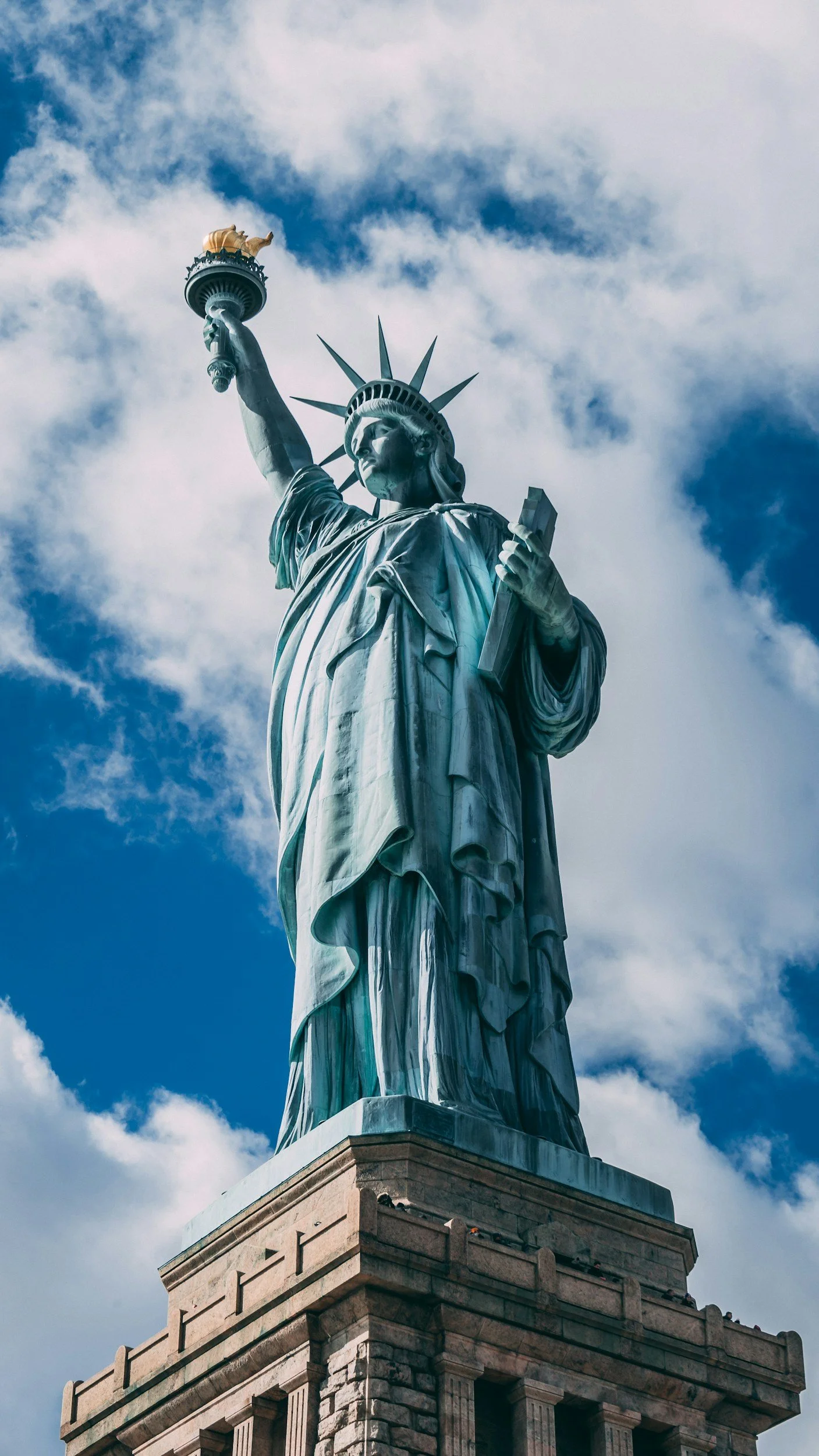
This weekend will mark the 250th birthday of the United States of America. “America 250” celebrations are sure to include a lot of talk about freedom, that value which lies at the heart of our national identity. But what exactly is this liberty that we prize so highly? Below, we share with you a thought-provoking reflection on this topic by one of our Junior Professed Sisters. We hope that it is meaningful for you and inspires you to pray for a resurgence of authentic freedom in our country on this special anniversary. God bless America!
The True Meaning of Freedom
Slowly but surely, life in the monastery has provided me with a great amount of interior freedom. In fact, it has happened so gradually that I had to stop and ponder how free I have actually felt, and it has caught me by surprise at times. Maybe this also catches you by surprise, considering that the monastic life is incredibly structured and demands many sacrifices. Most of my day is routinely scheduled for me: I do not decide what I have for lunch, I can’t take off and go to the beach when I feel like it, and I spend my time mostly in silence. How in the world does this bring freedom? This is especially hard to understand in today’s society, where freedom typically gets confused with license - I do what I want, when I want and how I want. If this is the true definition of freedom, then I am not free by any means.
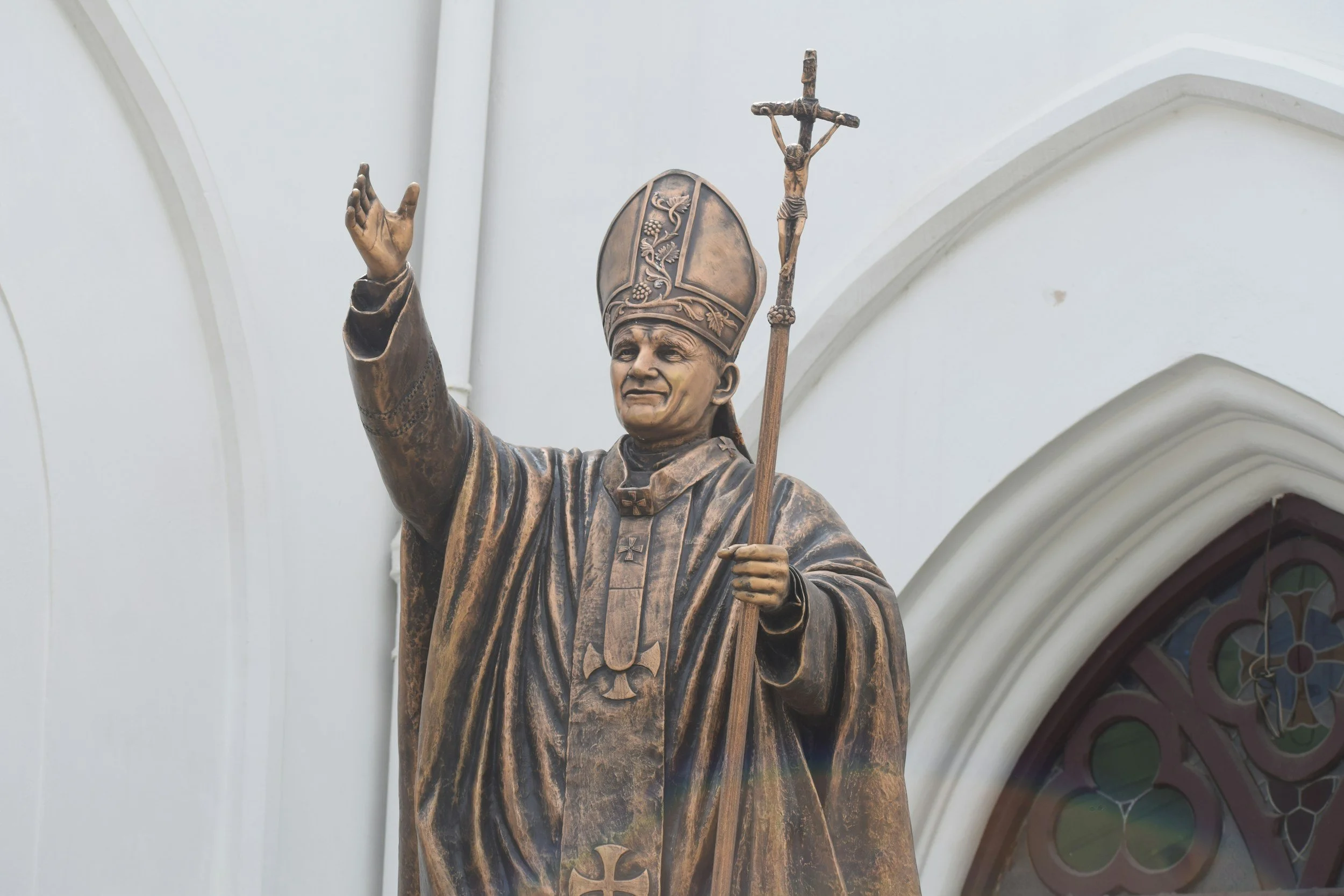
But what if there is more to freedom? St. John Paul II once said, “Freedom consists not in doing what we like, but in having the right to do what we ought.” This definition of freedom, if we truly look at it, is much more demanding than the other, more popular definition. I heard an analogy recently from Bishop Robert Barron that helped me to understand this definition better. He likens freedom to being a pianist. To say that I am a free player of the piano does not mean that I can sit down at a piano, randomly press on any given key, and call it music. No, to be a truly free player of the piano I have to learn scales, read music, perfect the proper posture, and practice … a lot. In other words, it takes discipline to become a free player of the piano.
In the same way, it takes discipline to become interiorly free, and it is only when one is interiorly free that she can do what she ought. So, in the monastery the discipline of the vows, the schedule, community life, and the liturgy has opened me up to freedom. Let me give some examples.
The freedom of obedience. Recently, a group of sisters were trying to find a way to break up a large work duty among us. Who could take what duties when? Among the five or so of us we all had different opinions, wants, and needs, and the conflict among all these factors was difficult to reconcile. All of us left our meeting feeling unsettled and unresolved. That is when we brought our Superior in to help. We have all made a vow of obedience to our Mother Superior, so when she stepped in and swiftly helped us made a decision how to break up the work duties, a feeling of peace flowed over me, and I have heard the same from other sisters involved. This effect doesn’t happen every time, and it is not natural to my fallen human nature, but over the years I have had to discipline my will, slowly but surely, to submit God’s will as it is manifested in my superiors. It was in this moment of obedience that I felt free.
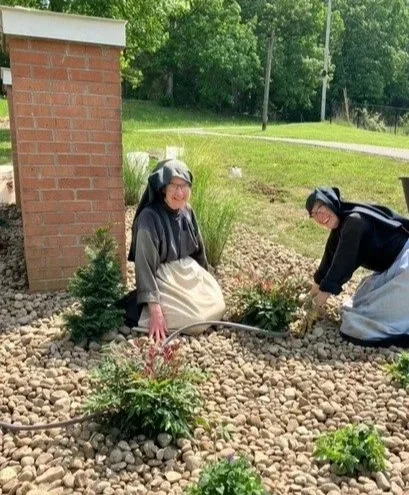
The freedom of poverty. An aspect of poverty that I found surprising was poverty of time. As monastics, we follow what is known as the horarium, our daily schedule of work, prayer, and rest/recreation. In the horarium there are no self-appointed vacation days, or naps at any given time. I can’t skip my work to do a personal project or take an extra fifteen minutes for spiritual reading because the book is so good. No, I am called to follow the schedule, wake-up and lights-out times, meals, work, and recreation as the community has laid it out for me. How has this brought freedom? I can admit that if it was up to me, I would gladly spend my days reading, praying, exercising, and napping. All these things are good and do have their place in the horarium. But as you may notice, I didn’t add work into my list at all. So, where the true freedom comes in is for me to give myself fully to each of these activities - yes, even my work! - whether I feel like it or not. For, as St. John Paul has said, freedom is not about doing what I want but what I ought. I ought to build up the community by my work, but I also ought to take time for exercise, and rest. I have had to discipline myself for years to accept the fact that as a religious everything I have belongs to God - and this includes my time. My time is no longer my own. I am poor in this way, and I must rely on the Lord to use my time wisely. I also must trust that the Lord will provide for me all my needs and the needs of the community in the time that he has given us.
In these and many other ways I have found that the constant discipline of monastic life has helped me to achieve freedom. Though I still desire a beach vacation every once in a while, or long to hit the snooze button and roll back over, the call to follow the Lord keeps me always moving forward. But maybe you are thinking: what’s the goal of all of this discipline? The piano player disciplines herself to master the piano in order to play beautiful music. Why do cloistered religious engage in such discipline? We engage in such discipline so to be completely free for God …To be free to hear his voice and follow immediately where he calls … To be free to follow his preferences manifested in numerous ways throughout the day rather than our own … In short, to be free to love as he has created us to , because love is the strongest force there is, and as the Little Flower has said, “in the heart of the Church I will be love.”