
Homily from the Profession Mass
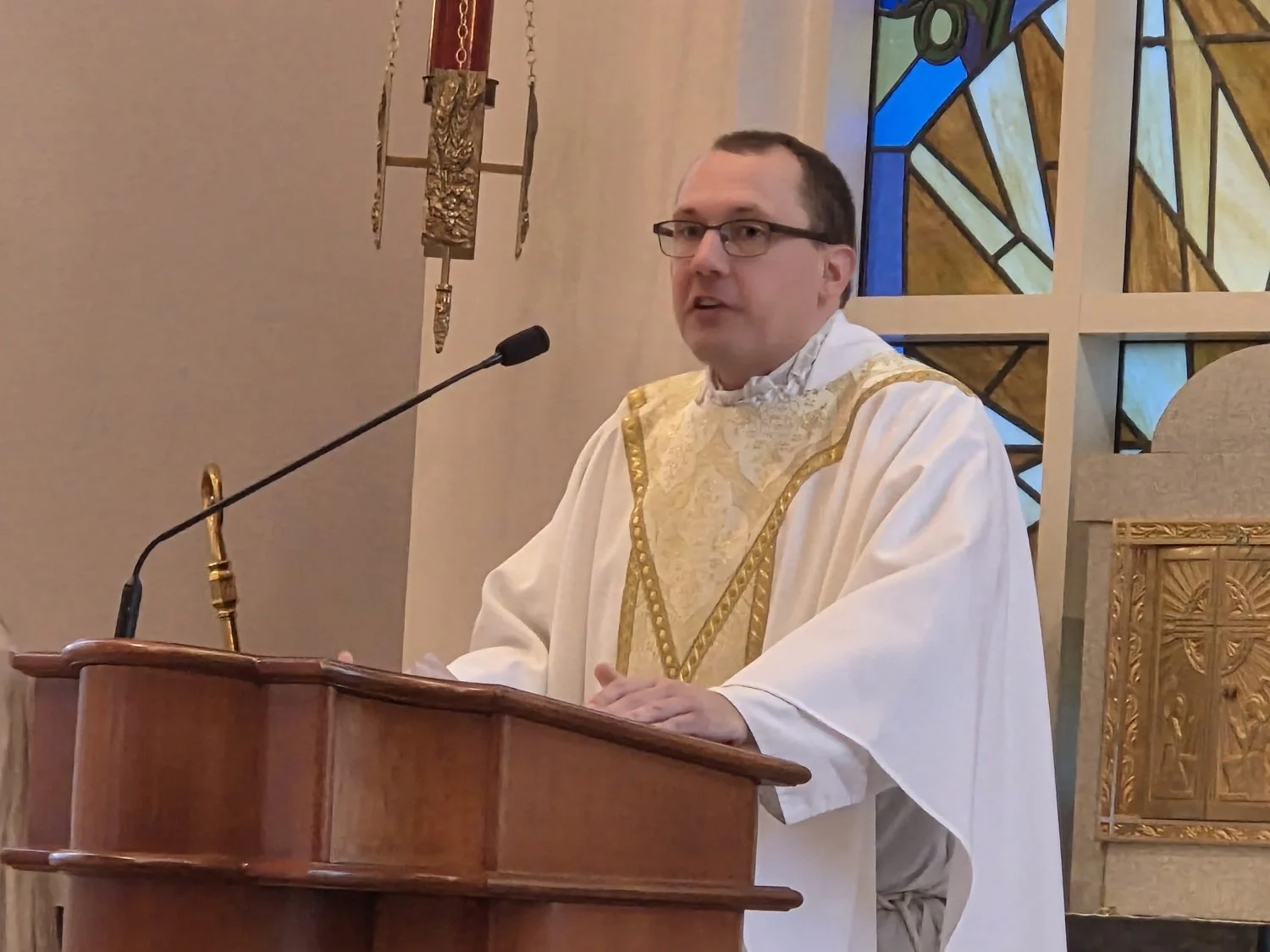
Fr. Jeff Stegbauer’s homily from Sr. Isabel Maria’s First Profession was so fantastic, we wanted to share it with you all! Enjoy :)
Homily for First Profession Mass -
Sr. Isabel Maria of Jesus, My Eucharistic Spouse
by Fr. Jeff Stegbauer, December 12, 2025
I am so humbled by Sr. Isabel Maria’s request for me to preach her Profession Mass. She asked me, in part, since we both share a deep love for St. Elizabeth of the Trinity and Our Lady of Guadalupe. She took Isabel from St. Elizabeth and today is, of course, the feast of Our Lady of Guadalupe. Sisters full name is Sr. Isabel Maria of Jesus my Eucharistic Spouse. Her name brings to mind the many times I would walk into Our Lady of the Rosary early in the morning to pray, then I would be startled to see her deep in prayer sitting on the floor in front of the first pew. This says a lot about her Eucharistic devotion and my lack of spatial awareness. Her full name recalls Jesus as the mediator, bridge between heaven and earth. An eternal now of the Eucharist. As St. Elizabeth says, “He wills that where He is we should be also, not only for eternity, but already in time, which is eternity begun and still in progress” (Heaven in Faith, pg 94). To remain in Him and with a love that is arrows of fire, flames of the divine, a consuming fire. We long to love God so passionately that rivers cannot sweep it away and we may be the praise of the glory of his grace. All of this, so that we may be worthy in the next life to be united with Him. Jesus’ sacrifice on the Cross, His nearness to us in the Incarnation, His radical love for us, and how available He is to us in this life shattered pre-existing notions of Divine intimacy, love, and eternal life.
The indigenous of modern-day Mexico and Central America—The Olmecs, Mayans, and Nahua people longed to be worthy of heaven, or in their words, the Flower World Paradise. However, it was out-of-reach. It was only for the best-of-the-best—the best artists, warriors, and highest nobles. Only they were worthy of this paradise. The commoners, the mere excellent, were not worthy. They pined for the closeness, intimacy that Christ now offers us, His sons and daughters.
They have an ancient poem, its translated title is Origin of Songs. At first glance, it seems to show that St. Juan Diego’s story is simply ripping off that more ancient poem. They have numerous similarities. They both have a hero who longs to bring flowers back from the Flower World Paradise—to make eternity available to everyone.
The singer begins by asking, “I ponder in my heart, where will I gather the holy, fragrant flowers?” After expressing his longing for such flowers, he divulges his goal, “If they showed them to me, I will fill my tilma, and with them, I will greet the nobles; with them, I will make the lords happy” (Flower World pg. 111). An honorable, golden hummingbird seems to answer his pleas to “relieve the sorrow of [his] beloved companions.” (pg. 113) The hummingbird leads him inside the mountain to the Flower World Paradise, and the singer is entranced by the flowers, and he is told, “Cut many flowers, whichever ones you will want; be happy, singer, and when you arrive, you’ll give them to our friends, the Lords and princes so they will give joy to the World Owner.” (pg. 115) The hero seems to have achieved his quest to bring the flowers back to the world—to show the path to be worthy for eternal life.
However, the Origin of Songs suddenly takes a tragic turn from jubilation to despair:
“But where would one whose worth is nothing get them? … Could one be accompanied to the Flower World Paradise who is nothing, afflicted, and who sins on earth? Indeed, it is the God of Far and Near who makes one worthy here on earth. And so my heart weeps as I remember going there to look about in the Flower World Paradise, I, the singer.” (pg. 117)
What happened? As the singer says he merely ‘remembers’ going there to simply ‘look’ at the flowers, we are left to wonder if the singer ever truly went there. Was it a dream? A vision? Did he really go, but was unable to bring back the flowers? Either way, he was unable to bring back the flowers. He was unable to find the path to be granted worthiness by the World Owner and God of Far and Near. Even if he had brought back flowers for the lords and princes, what is left for the sinners? The afflicted? How do they enter the Flower World. It becomes apparent that the Origin of Songs ends in tragedy with an insatiable longing for a world outside their grasp. How familiar does this sound to us after humanity was banished from the Garden of Eden?
Not only can we relate in the longing we had as the people of God before Christ’s death and resurrection, but also in navigating this life in faith. How easy is it to doubt? How challenging it is to remember God’s promises? How hard is it to trust that, like the singer, we can be truly worthy to go to eternal paradise?
Just as God the Father was silent while Jesus hung upon the cross, often, we are purified through a blind faith. We often experience a deep darkness, with a deep longing for eternal life, eternal union. Like the singer we cry out, “Could one be accompanied to the Flower World Paradise who is nothing, afflicted, and who sins on earth?” With a blind, yet profound faith, we must trust that Jesus is being faithful to his prayer, And I have given them the glory You gave Me…that they may be brought to perfection as one, that the world may know that You sent Me, and that You loved them even as You loved Me. With blind faith, we persevere towards eternal life, trusting in the blessings and merits of Christ’s passion, death, and resurrection. Gratefully, the Lord, even in this darkness, does not abandon us. First and foremost, He gives us the gift of His Son, His Crucifixion, His pierced heart. It was not us who chose God, but He who chose us. God has and continues to seek us out.

To further emphasize this, God has providentially fulfilled the Origin of Songs through Our Lady of Guadalupe and St. Juan Diego. Juan Diego was a “humble but respected Indian, a poor man of the people.” (Flower World pg 171). In other words, in Nahua culture, he was not worthy of the Flower World Paradise, yet on December 9, 1531, he stumbles upon the flowers, songs, and birds of the Flower World Paradise on Tepeyac Hill. He even asks himself, “By any chance am I worthy of what I hear?” Then, he encounters a beautiful lady, who he immediately recognizes as the Blessed Mother before she identifies herself. She explains why she is there appearing to Him, “I want very much that they build my sacred little house here, in which I will show [my Son], I will exalt Him on making Him manifest; I will give him to the people in all my personal love, in my compassionate gaze, in my help, in my salvation because I am truly your compassionate mother.” (pg 173) How unthinkable are her words, how radical. As the Mother of God, she desires to make Jesus Christ accessible to everyone—to show everyone their worthiness of her Son, our Savior. In a culture that believes eternal life is only open to the best of the best and not the commoner—this is shocking. She wants to lead everyone, including the common sinner, to eternal life in and through her Son, our Lord Jesus Christ. Is it possible that the desperate pleas of the singer, the common Nahua, might finally be answered, satisfied? After the back and forth of the rest of the story that we know, the suspense is ended, Our Lady gives us our answer. Yes. It is finished.
“Juan Diego climbed to the top of the hill…then he began to cut [the flowers], he gathered them all, he put them in the hollow of his tilma.” This is the miracle of the flowers on the top of the barren hill of tepeyac during December, the time when frost kills all flowers. However, we are still left wondering, is it real? Has Juan Diego truly placed flowers in his tilma or is it an illusion like the singer? We do not have to wait long to find out as a Bishop, a successor of the Apostles, witnessed it as Juan Diego, “Held out his white tilma…and just as all the different Castilian roses fell out upon the floor then and there, the beloved Image of the Perfect Virgin Holy Mary, Mother of God, became the sign, suddenly appeared in the form and figure in which it is now.” Not only, did Juan Diego, unlike the singer, actually bring flowers back from heaven, Our Lady gave the gift of her image on his Tilma. Showing that the forgiveness of sins is for everyone, not only the Lords, warriors, and nobles. She came to fulfill the Origin of Songs, to show the Nahua people and the whole world, the merits of the Blood of Christ. It shows us that God is seeking us out, wanting to be near to us, to encourage us as we journey in blind, dark faith—to be the bridge, mediator between heaven and earth. And Mary’s request was answered—a church was built. As souls were baptized, our Lord was near them in the Most Blessed Sacrament. In a sense, Juan Diego not only brought back flowers, but brought back our Lord Himself for his brothers and sisters, for us. He brought Jesus back to show us the fire, the passion of His love. How blessed are we?
Sr. Isabel Maria, in a sense, is like the singer in the Origin of Songs, longing to bring back flowers from the Flower World Paradise for the whole world—to show us how to be worthy to enter ourselves—to show us the way. Thankfully, unlike the singer, this story does not need to end in tragedy as our Triune God has done what we could not on our own—died for our sins, so we may have eternal life with Him. Through His very Incarnation—as the Way, the Truth, the Life—He has shown us the way to eternal life. The way to persevere in blind faith towards eternal life—the Flower World Paradise.
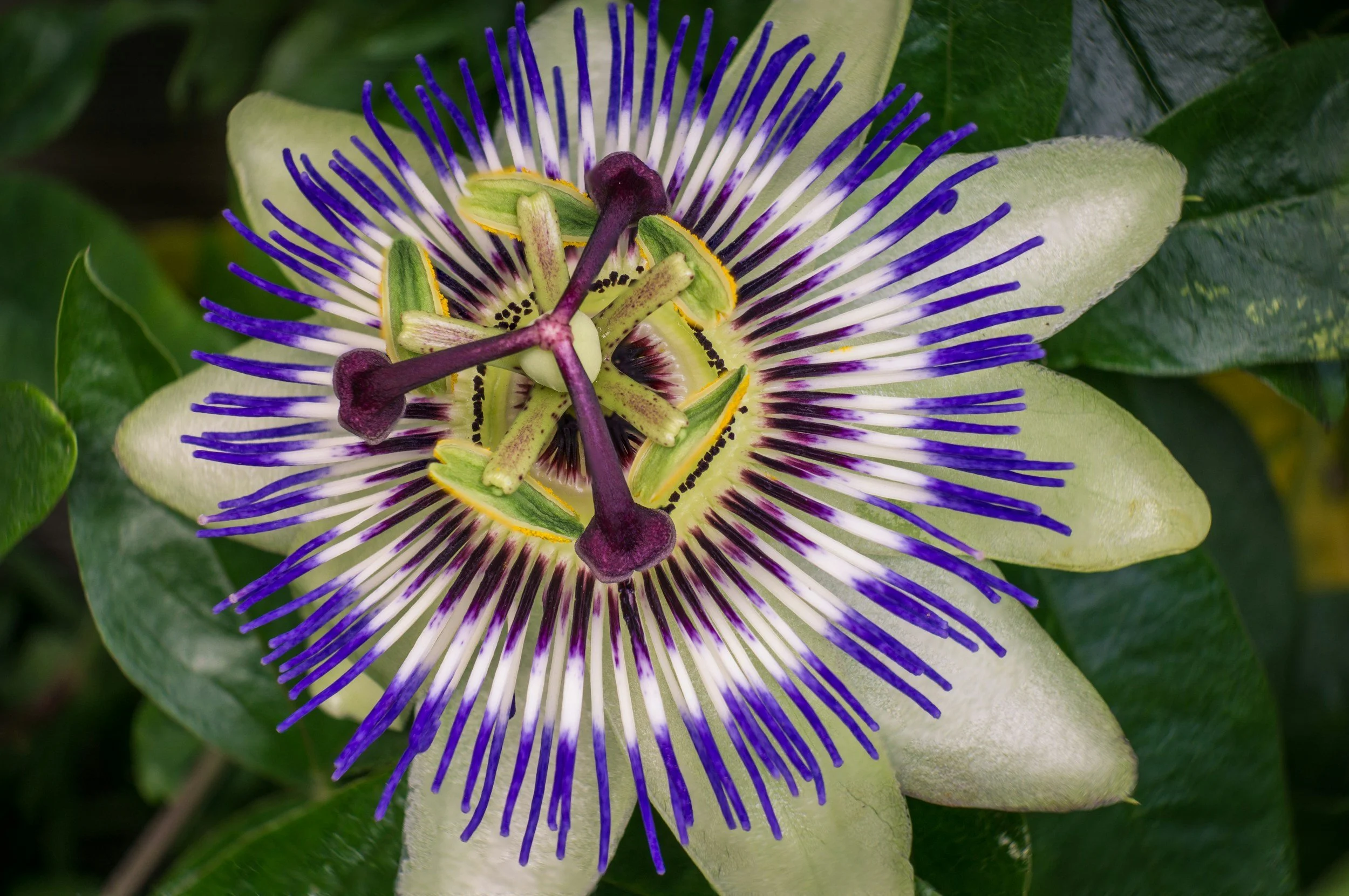
Sr. Isabel Maria of Jesus my Eucharistic Spouse, like Juan Diego, lives to bring heaven to earth. To bring Jesus and His heavenly flowers back from heaven, so that souls may know the Love that her Eucharistic spouse has for them. She does through her vows as a Passionist Nun, by living united to the Passion of our Lord. Sr. Isabel Maria is making her vows to live the evangelical counsels of chastity, poverty, and obedience as a reminder of where we are journeying in blind faith. She, and her fellow nuns, are making these challenging vows and sacrifices for the sanctification of the Church. As if they are already in the next life, living completely for and with the Lord. The Passionist Nuns make two additional vows to further witness, encourage, and sacrifice in love—first the Passion Vow to promote devotion to the Passion of Christ and the vow of enclosure. These vows are heavenly flowers for us.
She has accepted the gift of this vocation from the hand of her beloved so, we may walk together courageously in blind faith towards eternal life. As St. Elizabeth of the Trinity says, so we may live in eternity on earth and, ultimately, “In heaven, [as] each soul is a praise of glory of the Father, the Word, and the Holy Spirit, for each soul is established in pure love and lives no longer its own life, but the life of God. The religious vocation, is a witness of heavenly flowers to the rest of us of the life to come. How beautiful to have such courageous women among us? They are like us, sinners in need of God’s mercy, journeying in blind faith, pining in their souls for union with our Beloved. How do these women bring us flowers from heaven to encourage us to persevere in our vocations? How do they make Jesus more accessible to us here on earth as we long for eternity? How blessed are we to witness and be blessed by such a gift of the heavenly flowers of the Passionist Vocation.